
Industry Insights & Beauty Trends
Expert strategies, cosmetic manufacturing guides, and growth tips for beauty brand founders.
High-Demand OEM/ODM Formulations & Beauty Solutions
Turnkey private label solutions formulated in compliance with FDA, EU Regulation (EC) No 1223/2009, and ISO 22716 GMPC standards.



Institutional Manufacturing Infrastructure & E-E-A-T Excellence
Navigating global cosmetics procurement requires rigid regulatory adherence, advanced chemical engineering, and transparent supply chain integrity.
GMPC & ISO 22716 Cleanroom Standards
Our production ecosystem operates under strict automated cleanroom parameters. By maintaining positive differential air pressure, HEPA filtration, and strict microbiological sanitation protocols, we guarantee zero contamination across sensitive clinical emulsions and active serum fillings.
Turnkey Custom Formulation & Reverse Engineering
Equipped with advanced high-performance liquid chromatography (HPLC) and rheology mapping, our cosmetic chemists engineer bespoke formulations—from bio-fermented actives to lipid-encapsulated peptides—tailored specifically to your brand positioning and target demographic.
Global Regulatory Dossiers & Toxicological Clearance
We eliminate international entry barriers by generating full Material Safety Data Sheets (MSDS), Certificate of Analysis (COA), Cosmetic Product Safety Reports (CPSR), and INCI-compliant ingredient declarations for immediate FDA, Health Canada, and EU CPNP registration.
OEM/ODM Capability Matrix: Strategic Supplier Evaluation
A comparative technical analysis evaluating critical operational indicators between enterprise contract manufacturers and legacy suppliers.
| Evaluation Vector | Pinnacle OEM/ODM Manufacturing | Standard Tier-2 Suppliers | Strategic Impact on Brand |
|---|---|---|---|
| Batch Flexibility & MOQ | Agile low-MOQ starting models to enterprise scale | Rigid High MOQs (5,000–10,000 units minimum) | Drastically reduces upfront working capital risk |
| R&D Innovation Cycle | Bi-monthly release of cutting-edge bio-active formulas | Static catalog updated every 2–3 years | Captures market trends and micro-viral momentum |
| Quality Control Testing | HPLC, stability, challenge, heavy metal, microbial | Basic visual inspection & pH sampling | Guarantees zero product recalls and high safety compliance |
| Lead Time & Fulfillment | Rapid 2 to 3-week production lead times post-approval | 8 to 14 weeks with unpredictable logistics delay | Accelerates time-to-market and inventory turnover |
| Regulatory Documentation | Complete CPSR, PIF, COA, MSDS, FDA CPNP turnkey support | Basic COA only; buyer handles registration | Seamless entry into Western retail channels |
Industry Whitepaper: The Strategic Evolution of Chinese Beauty Contract Manufacturing (2025–2030)
An executive analysis on bio-tech integration, global compliance, and agile supply chain strategies for beauty brands, spa chains, and cosmetic entrepreneurs.
The global cosmetics industry is experiencing a seismic paradigm shift. Modern consumers no longer consume marketing claims; they consume micro-ingredients, clinical efficacy data, and bio-technological proof. In this hyper-informed landscape, beauty brand success is intrinsically bound to contract manufacturing capabilities. Navigating China's OEM (Original Equipment Manufacturer) and ODM (Original Design Manufacturer) ecosystem has evolved from simple cost arbitrage to a strategic imperative centered on biochemical innovation, rapid formulation agility, and strict regulatory alignment.
1. The Convergence of Biotechnology and Cosmeceutical Formulations
Historically, private label beauty production relied on standard emulsions consisting of mineral oils, basic humectants, and synthetic fragrances. Today, China's elite OEM/ODM facilities function as high-tech biochemical laboratories. The global market demands active ingredients capable of cellular-level skin regeneration, barrier repair, and anti-aging signaling.
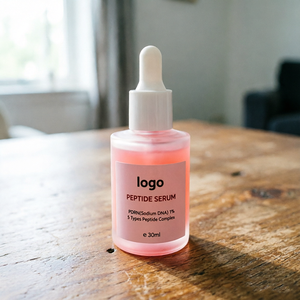
- PDRN (Polydeoxyribonucleotide) & Salmon DNA Peptides: Derived from controlled bio-extraction, PDRN activates adenosine A2A receptors, initiating tissue repair and neocollagenesis. Formulating PDRN requires strict low-temperature ultrasonic homogenization to maintain polynucleotide stability.
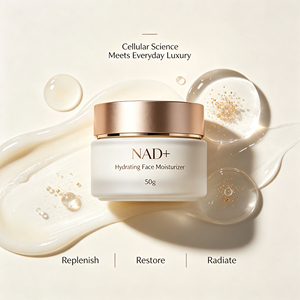
- NAD+ (Nicotinamide Adenine Dinucleotide) Cellular Longevity Complexes: As cellular coenzymes deplete with chronological aging, top-tier ODM facilities encapsulate NAD+ within phospholipid liposomes to overcome skin barrier degradation and stimulate mitochondrial renewal.
- Fermented Actives & Microbiome Balancing: Utilizing micro-organism bio-fermentation (e.g., Lactobacillus and Bifida Ferment Lysate), complex botanical matrices are broken down into low-molecular-weight bio-available nutrients that nourish the skin microbiome without triggering inflammatory cascades.
- Laser & Aesthetic Procedure Aftercare: Post-mesotherapy and fractional laser recovery requires specialized sterile formulations containing biomimetic ceramides, multi-weight hyaluronic acids, and centella asiatica triterpenes to instantly restore transepidermal water loss (TEWL).
2. Future Procurement & Manufacturing Trends in Global Beauty Sourcing
As retail channels shift toward direct-to-consumer (DTC) agile launches and clean-beauty certifications, procurement officers must adapt their sourcing strategies to match emerging supply chain mechanics:
Agile Low-MOQ Production
Legacy contract manufacturing required minimum runs of 10,000 units per shade or formulation, binding brand capital. Modern procurement favors flexible OEM suppliers offering modular batching (e.g., 100 to 1,000 units), allowing brands to test market demand before committing to enterprise-scale production runs.
Sustainable & Monomaterial Packaging
Regulatory pressure in Europe and North America (such as the EU Packaging and Packaging Waste Regulation) mandates recyclable materials. Progressive ODM facilities integrate PCR (Post-Consumer Recycled) plastics, refillable aluminum cartridges, and ocean-bound plastic solutions seamlessly into turnkey product designs.
Clean Science & Free-From Integrity
Ingredient transparency is mandatory. Formulations must strictly exclude parabens, phthalates, mineral oils, talc, synthetic sulfates, and formaldehydes. Concurrently, products must pass 28-day PET (Preservative Efficacy Testing) to preserve microbial safety without harsh synthetic preservatives.
3. Rigorous Quality Assurance & Clinical Testing Frameworks
To establish true authority and reliability (E-E-A-T) under Google Search Guidelines and international law, OEM/ODM manufacturers must implement standardized multi-stage quality control protocols:
Phase A: Raw Material Verification (IQC)
All active raw materials, plant extracts, and specialty chemicals undergo Fourier Transform Infrared Spectroscopy (FTIR) identification, heavy metal screening (Arsenic, Lead, Mercury, Cadmium via ICP-MS), and microbial limit testing prior to entering the formulation phase.
Phase B: In-Process Emulsification & Filling Control (IPQC)
During batch mixing in vacuum emulsifying homogenizers, continuous real-time monitoring measures viscosity, pH balance, specific gravity, and droplet size distribution. Viscous serums and creams undergo centrifugal separation tests at 4,000 RPM for 30 minutes to verify long-term thermodynamic stability.
Phase C: Finished Good Validation (FQC) & Packaging Integrity
Filled containers are tested for hermetic sealing via vacuum leak testing, freeze-thaw thermal cycling (-10°C to 45°C over 48 days), and UV exposure testing to guarantee color stability, scent integrity, and functional shelf-life across global transport conditions.
4. Step-by-Step OEM/ODM Procurement Workflow for Beauty Brands
Executing an OEM/ODM beauty line requires a structured operational blueprint to streamline execution from initial concept to commercial dispatch:
- Step 1: Product Briefing & Formula Selection: Define product category, target performance indicators, texture profile, key benchmark products, price positioning, and regional compliance needs (USA FDA, EU CPNP, ASEAN cosmetic directives).
- Step 2: Sample Prototyping & Clinical Feedback: R&D formulates lab-scale sample batches (50g–100g) for evaluation. Brands test skin feel, absorption rates, scent profiles, and immediate efficacy before sign-off.
- Step 3: Packaging Sourcing & Artwork Proofing: Choose compatible primary packaging (airless pump bottles, amber glass droppers, multi-layer aluminum tubes) and secondary packaging (FSC-certified paper boxes). Artwork files undergo regulatory label audits for correct INCI listing and metric declarations.
- Step 4: Mass Batch Manufacturing & Quality Audit: Production commences in GMPC/ISO 22716 cleanrooms. Batch records (BMR) are archived for total traceability. Certificate of Analysis (COA) is issued upon passing final microbiological testing.
- Step 5: Logistics, Customs & Global Fulfillment: Finished products are palletized with protective shrink wrapping and shipped via air or sea freight accompanied by MSDS, Safety Data Sheets, Dangerous Goods declarations (if applicable), and Bill of Lading documentation.
OEM/ODM Beauty Procurement FAQ
Answers to common operational, technical, and regulatory questions regarding custom beauty manufacturing and sourcing.
What is the key structural difference between OEM and ODM beauty manufacturing?
What are your Minimum Order Quantities (MOQs) for private label skincare and cosmetics?
How do you guarantee international regulatory compliance for US, EU, and UK markets?
What is the typical production timeline from artwork approval to shipment?
Can you execute reverse engineering or clone an existing market benchmark formula?
Are your beauty formulations cruelty-free, organic, and vegan certified?
Scale Your Beauty Brand with a Trusted OEM/ODM Partner
Whether launching your first skincare line or expanding an international cosmetic portfolio, our technical team provides instant formulation assistance, sample sets, and factory-direct pricing.