The demand for cleaner, more transparent color cosmetics is reshaping how wholesale buyers evaluate eye makeup. Grand View Research identifies eye makeup as a major global cosmetics segment, supported by product innovation, premiumization, and expanding online retail. Circana also reported continued growth in U.S. prestige beauty during 2023, with makeup benefiting from renewed consumer interest. These figures suggest opportunity, but they do not guarantee sell-through for every palette.
This guide introduces the Top 10 Talc-Free Eyeshadow Palettes for Wholesale Buyers, focusing on practical commercial evidence rather than attractive packaging alone. A Talc-Free Eyeshadow Palette may appeal to retailers seeking alternative formulations, clearer ingredient communication, and trend-responsive assortments. However, “talc-free” does not automatically mean safer, cleaner, or better performing. The category is not perfectly defined.
Wholesale evaluation should examine the full INCI list, pigment intensity, blendability, fallout, shade consistency, packaging durability, minimum order quantity, and batch documentation. Buyers should also request current safety assessments, stability information, and relevant quality-control records from suppliers. Euromonitor and Mintel consumer research consistently show that ingredient transparency influences purchasing decisions, although price, performance, and brand credibility remain equally important.
A useful test is simple: apply the shimmer at 9 a.m., inspect it at 6 p.m., and record creasing, fading, and fallout. Small details matter. Supplier claims need verification. This ranking is therefore designed as a starting point for informed sourcing, not a substitute for independent testing or local regulatory review. Some conclusions may change as formulas, packaging, and consumer expectations evolve.
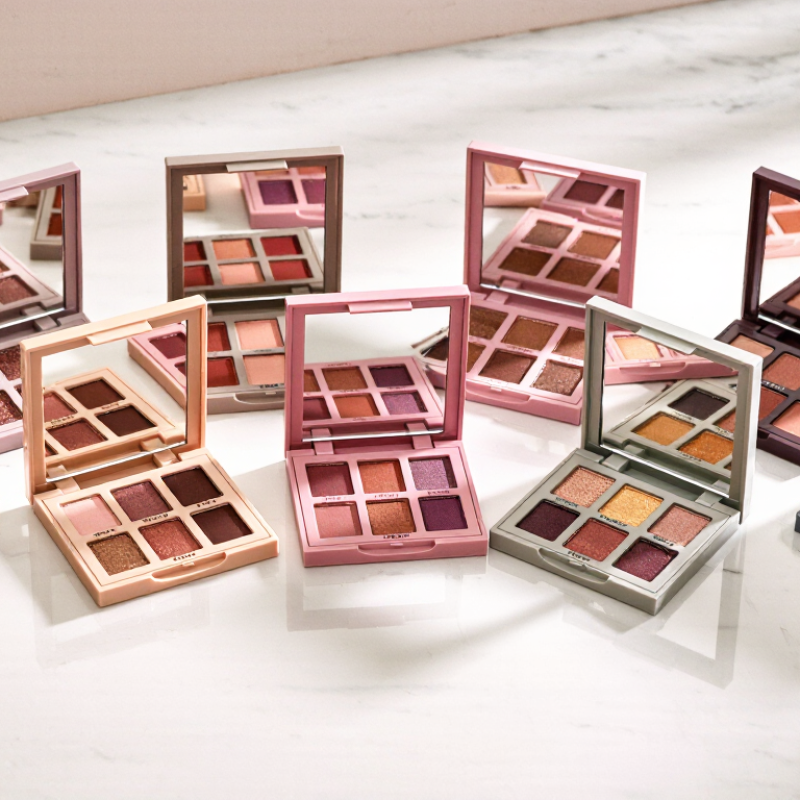
What Talc-Free Eyeshadow Palettes Are and Why Wholesalers Choose Them
Top 10 Talc Free Eyeshadow Palettes for Wholesale Buyers
Talc-free eyeshadow palettes contain no talc in their pressed or loose powder formulas. Manufacturers often use mica, silica, starches, or clay-based powders instead. The texture can feel different. Some alternatives create more grip, while others produce softer fallout. Talc-free does not automatically mean safer or better. Formula quality still depends on sourcing, testing, and processing controls.
Wholesalers choose these palettes because ingredient transparency is becoming commercially important. Circana’s 2024 U.S. prestige beauty review reported that makeup sales grew 15% in 2023. Meanwhile, a 2024 Grand View Research report estimated the global eye makeup market at more than USD 18 billion. These figures suggest strong category demand, but they do not guarantee every talc-free product will sell. Buyers should inspect shade performance, packaging durability, and repeat-order evidence. A palette that looks attractive online may crack during transport.
Tips: Request the full INCI list, batch-specific certificates, microbial results, and stability data. Test a sample on skin and under studio lighting. Check whether metallic shades separate after several hours. Ask how the supplier controls powder dust and pressing pressure. Do not rely on “clean” wording alone. Talc-free claims should match documented formulation records. I have seen buyers focus on ingredient labels while overlooking weak hinges and stained inserts. That mistake is easy to repeat.
Top 10 Talc-Free Eyeshadow Palettes for Wholesale Buyers
What Talc-Free Eyeshadow Palettes Are and Why Wholesalers Choose Them
This 100-point wholesale evaluation framework highlights the practical factors buyers commonly review when comparing talc-free eyeshadow palettes. Ingredient transparency, regulatory documentation, shade versatility, packaging durability, and dependable supply are especially important because talc-free claims do not replace the need for safety, quality, and delivery verification. The weighting is an editorial purchasing model rather than market-share data.
How to Evaluate the Top 10 Palettes for Wholesale Purchasing
For wholesale buyers, evaluating talc-free eyeshadow palettes requires more than checking a “clean” claim. Grand View Research estimates that the global eye makeup market reached about USD 16.6 billion in 2023, with continued growth expected through 2030. That demand creates opportunity, but also crowded shelves. Request the complete INCI list, supplier specification sheet, certificate of analysis, microbial testing, and heavy-metal screening for every shade. “Talc-free” should be traceable, not merely printed on the carton.
Performance must be tested under retail conditions.
Apply each shade over primer and bare skin, then inspect fallout after eight hours. Check pigment payoff, blendability, crease resistance, odor, and color consistency between batches. Packaging matters too. A cracked hinge or weak mirror can increase returns. Circana’s beauty market reporting repeatedly shows that consumers remain highly engaged with makeup, yet purchase decisions are sensitive to value and product performance. Therefore, compare usable grams, not only unit price. A lower-cost palette may contain smaller pans and create weaker margins.
Wholesale evaluation also needs operational evidence. Review minimum order quantities, lead times, sample approval procedures, carton dimensions, and replacement policies. Ask whether formulas remain stable after heat and freeze-thaw testing. This step is often skipped. That is a mistake. I have seen attractive samples fail when shipped in warm warehouses, although laboratory results looked acceptable. Keep retained samples from each batch and record shade photographs under consistent lighting. No palette is perfect. A written scoring sheet can expose weaknesses before a large purchase.
Sourcing and Quality Checklist for Reliable Wholesale Suppliers
Top 10 Talc Free Eyeshadow Palettes for Wholesale Buyers
Wholesale demand for talc-free eyeshadow continues to rise with clean-label purchasing. Grand View Research estimates the global eye makeup market reached about USD 16.4 billion in 2023. However, demand alone does not prove product quality. I ask suppliers for the complete INCI list, talc-free declaration, batch number, and certificate of analysis. The formula should also show pigment names, preservatives, and fragrance details. Vague “natural” claims are not enough.
Quality checks should happen before negotiating large quantities. Request three production samples, not only one polished showroom sample. Compare color payoff, fallout, pan adhesion, and texture under daylight. Check sealed packaging for cracks, loose pans, and unreadable lot codes. Ask for microbial testing, heavy-metal screening, stability results, and ISO 22716 manufacturing evidence. FDA guidance under the Modernization of Cosmetics Regulation Act places stronger responsibilities on cosmetic businesses for safety records and adverse-event reporting. A supplier without traceable documentation creates avoidable risk.
Tips: Keep a retained sample from every batch. Test it after transport, heat exposure, and six weeks of storage. Confirm carton dimensions and net weight before calculating margins. A low price can hide weak pigment loads or unstable binders. I have learned that even careful checklists miss problems when approval samples differ from mass production. Build a written tolerance for shade variation, broken pans, and missing labels before signing purchase terms.
Conclusion
A Talc-Free Eyeshadow Palette is designed without talc while still delivering smooth application, blendability, color payoff, and comfortable wear. For wholesale buyers, these palettes can meet growing demand for transparent ingredient choices and modern beauty preferences. When reviewing formulas, buyers should examine alternative ingredients such as mica, starches, clays, and conditioning agents, while confirming that products follow applicable cosmetic safety, labeling, and testing standards.
To evaluate the top 10 options, wholesalers should compare shade variety, pigmentation, texture, packaging durability, retail presentation, wholesale pricing, and minimum order quantities. A reliable supplier should provide clear ingredient lists, product specifications, sample availability, consistent quality controls, secure packaging, and realistic production timelines. Buyers should also confirm batch consistency, shelf-life information, shipping terms, and communication procedures before placing larger orders. A practical sourcing checklist helps wholesalers select palettes that balance consumer appeal, operational efficiency, and dependable long-term supply.