Industry Insights & Beauty Trends
Expert strategies, cosmetic manufacturing guides, and growth tips for beauty brand founders.
China has become an important sourcing destination for brands developing Private Label Setting Spray. Yet a manufacturer’s location alone says little about product quality. Buyers need to examine formula options, sample consistency, packaging compatibility, production controls, and communication before making a decision.
Cosmetic chemist Perry Romanowski is known for his evidence-focused approach to cosmetic products. The following is a paraphrased takeaway, not a verbatim quotation: “Judge a formula by its performance and testing, not by its promises.” That principle matters for setting sprays. A fine mist should apply evenly; the formula should feel comfortable; and its performance should be assessed under realistic conditions. Claims still need careful review. A polished label cannot replace product evidence.
This guide introduces leading Private Label Setting Spray manufacturers in China and the practical questions buyers can ask. Look for clear sample procedures, accessible product documentation, and consistent answers about ingredients, packaging, and production. Request samples and compare the spray pattern, finish, and wear in your intended market. Small details matter. A nozzle that spits or a formula that feels tacky can undermine an otherwise promising product. No supplier is perfect, and a strong first impression is not proof of long-term consistency. Verify what you can, document what remains unclear, and treat this overview as a starting point for due diligence—not a substitute for direct evaluation.
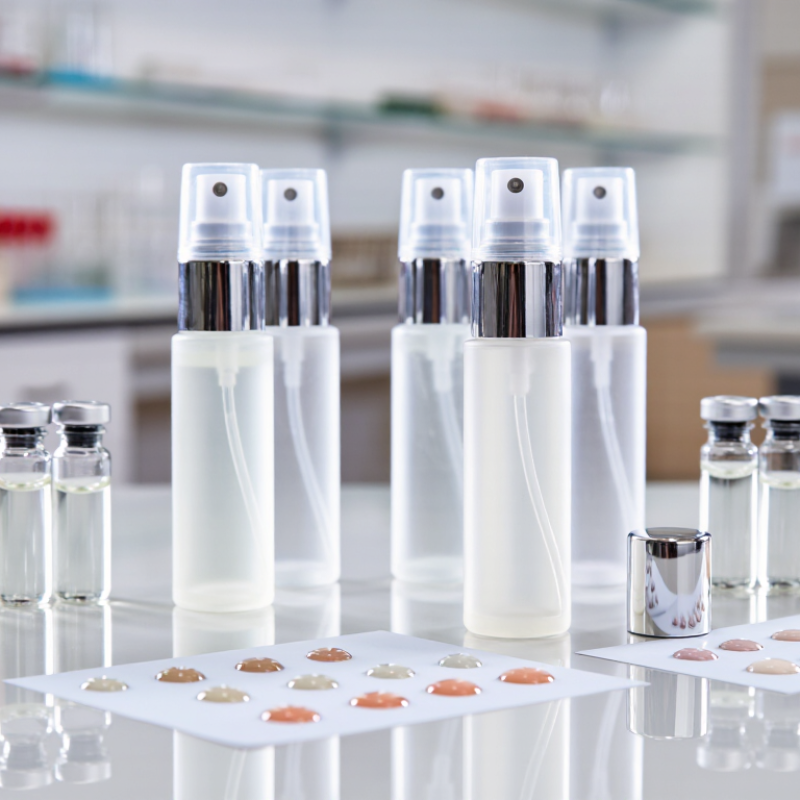
Private Label Setting Spray Manufacturing in China: Industry Overview
China’s private label setting spray industry includes contract manufacturers offering formulation, filling, and packaging services. Capabilities vary: some facilities develop formulas in-house, while others adapt established bases to a buyer’s brief. Common formats include fine-mist pumps, travel-size bottles, and cartons with custom artwork.
Formula discussions often cover dry-down time, finish, fragrance, and compatibility with different skin types. A useful sample review checks the spray pattern, not just the liquid. Does it settle evenly? Does the pump clog after repeated use? These small checks can reveal production issues early. Manufacturers may also conduct stability and packaging compatibility tests, though the scope and timing should be confirmed for each project.
Quality control can include checks on filling volume, batch records, and finished packaging. Buyers should request clear specifications, sample approval steps, and realistic production timelines. Minimum order quantities and customization options differ by factory and packaging choice. A polished sample is reassuring, but it cannot guarantee every later batch will feel identical. That deserves attention. Clear communication and documented checks help reduce surprises, even when a supplier has substantial experience.
| Industry dimension | Typical manufacturing context | Buyer considerations |
|---|---|---|
| Product formats | Common formats include fine-mist liquid sprays, hydrating sprays, and longer-wear makeup-setting sprays. Formulas may be water-based or use a water-and-alcohol system. | Confirm the intended skin feel, finish, drying time, and compatibility with the target market before approving a formula. |
| Private-label options | Manufacturing programs may offer existing base formulas, formula adjustments, or development of a custom formula, depending on the facility and project scope. | Ask what formula ownership, exclusivity, development fees, and change-control terms apply. |
| Packaging | Products are commonly packed in plastic or glass bottles with a spray pump. Bottle capacity, pump output, and decoration options vary by supplier and packaging choice. | Test the filled pack for spray pattern, leakage, clogging, and formula–package compatibility; confirm whether packaging is supplied by the manufacturer or buyer. |
| Quality controls | A quality program may include incoming-material checks, batch records, in-process controls, finished-product testing, and retained samples. ISO 22716 is an internationally used cosmetics GMP guideline. | Request relevant quality-system documents, product specifications, test methods, and batch-release criteria; verify that certificates apply to the actual manufacturing site. |
| Stability and safety | Testing plans are generally selected for the formula, packaging, and destination market. They may include stability, microbial quality, and package-compatibility assessments. | Agree on test scope and acceptance criteria in advance. Requirements can differ by product type and market, so a generic test list is not a substitute for regulatory review. |
| China regulatory context | China’s Cosmetics Supervision and Administration Regulation (CSAR) took effect on January 1, 2021. Cosmetics marketed in China are subject to applicable registration or filing requirements and supporting safety obligations. | Confirm product classification, responsible-party arrangements, labeling, and current NMPA requirements for the specific formula and claims. |
| Export compliance | Products made in China for export must also meet the applicable rules of their destination market, including ingredient restrictions, safety documentation, and labeling requirements. | Identify the destination countries early and assign responsibility for regulatory review, translations, claims substantiation, and final label approval. |
| Lead time and minimum order | Minimum order quantities and lead times are not uniform; they depend on formula development, component availability, decoration, testing, and production scheduling. | Obtain a written quotation that separates sampling, packaging procurement, production, testing, and shipping timelines. |
| Supplier evaluation | Relevant capabilities include formulation support, filling and packing capacity, traceability, quality management, and experience with the buyer’s intended markets. | Evaluate the production site, request samples and documentation, and confirm that the contract clearly covers specifications, defects, rework, and change notifications. |
Note: This overview describes common industry practices. Specifications, services, regulatory obligations, minimum order quantities, and lead times vary by manufacturer, product, and destination market.
FAQS
Test the mist on skin, not just on a card. Check coverage, dry-down time, scent, and finish. Small details matter.
Repeated sprays can reveal clogging, sputtering, or uneven droplets. A smooth first spray proves little.
Ask for ingredient specifications, batch records, filling-volume checks, and traceability details. Confirm who maintains each record.
No. A polished sample is reassuring, but later batches may differ. Put formula and packaging specifications in writing.
Check for leaks, pump compatibility, and formula reactions with the bottle. A damp carton is an obvious warning.
Discuss minimum quantities, sample fees, production timing, and defect handling. Get agreed details in writing.
Match the factory’s realistic lead time to your order size. Ask how pilot batches transition into full production.
A visit can show equipment, hygiene practices, and inspection routines. It cannot guarantee every batch. Keep that in mind.
Conclusion
This guide explores China’s private label setting spray industry, from manufacturing capabilities and production processes to the factors shaping product development. It outlines how to assess potential manufacturers based on experience, facility capabilities, production capacity, communication, and ability to support different business needs. Readers will also learn about common formula and packaging options, along with customization services that can help create products suited to a target market and product positioning.
The guide also explains how to review quality management practices, product testing, documentation, and regulatory requirements relevant to intended sales destinations. It highlights export considerations such as packaging specifications, shipping arrangements, and clear communication about responsibilities and timelines. By comparing these areas carefully, businesses can make more informed decisions when selecting a Private Label Setting Spray manufacturer and establish a practical foundation for consistent product quality and a reliable supplier relationship.