Industry Insights & Beauty Trends
Expert strategies, cosmetic manufacturing guides, and growth tips for beauty brand founders.
How to Choose Loose Mineral Powder Foundation in 2026
Choosing Loose Mineral Powder Foundation in 2026 starts with fit, not hype. Shade, coverage, finish, and wear time matter more than a polished label. A fine veil can soften shine across the forehead, while too much powder may emphasize dry patches beside the nose. That happens. Your skin, application technique, and lighting all affect the result.
Market data helps explain why careful comparisons matter, but it cannot pick a formula for you. Circana reported that U.S. prestige beauty sales reached $33.9 billion in 2024, up 7% from the previous year, while makeup sales grew 5%. These figures describe the wider prestige market, not mineral powder foundation alone. They show commercial momentum, not proof that a particular product performs better or suits every skin type. That distinction is easy to miss.
A useful guide should look beyond “mineral” on the package. Check the ingredient list, shade range, particle feel, coverage claims, and directions for application. Compare the color along your jaw in daylight, then see how it looks after several hours. A bathroom mirror can be misleading. Also consider whether the formula contains ingredients you personally prefer to avoid, and review claims with care; “mineral” does not automatically mean irritation-free. Product descriptions rarely tell the whole story. This guide focuses on practical checks and evidence-aware comparisons, while recognizing that no single powder works for everyone. Sometimes, the best choice is less exciting than expected.
What Loose Mineral Powder Foundation Is and How It Works
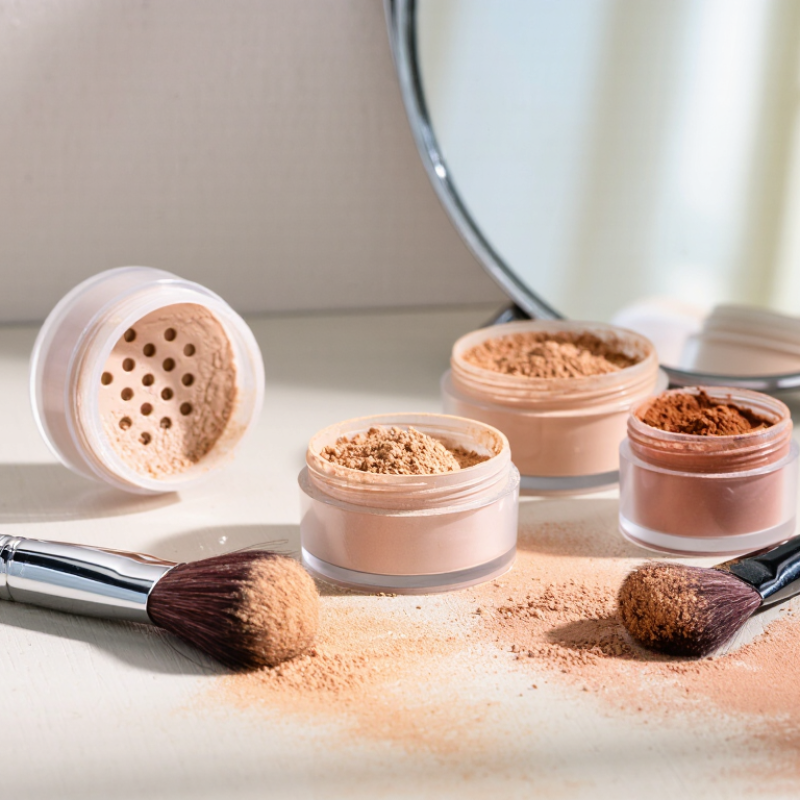
Loose mineral powder foundation is a dry face makeup made from finely milled pigments and other ingredients that affect its feel and finish. Iron oxides usually provide color, while ingredients such as mica may add slip or a soft sheen. The word “mineral” does not mean every formula has the same recipe. Unlike many liquid foundations, loose powder contains little or no water and is dispensed through a sifter.
During application, a brush picks up a small amount of powder and spreads it over the skin. Gentle buffing helps the pigments sit more evenly, softening the look of uneven tone without creating a wet layer. Coverage varies with the formula, brush, and amount used. Less can work. Too much powder may settle into dry patches or make texture more noticeable, especially if skin preparation is uneven.
For a practical test, apply a light layer to clean, moisturized skin and check it in daylight. Notice how the shade looks after several minutes; lighting and natural skin oils can change its appearance. A powder may feel weightless on one person and emphasize flaky areas on another. That difference matters. “Mineral” alone does not predict comfort or wear, so the ingredient list and your own skin’s response deserve a closer look.
How to Match a Formula to Your Skin Type and Needs
A loose mineral powder should solve a specific skin concern, not just look weightless in its jar. For oily skin, try a finely milled, low-shine formula and press a small amount onto the nose and forehead. Dry or flaky skin often looks more even when you moisturize first and use powder sparingly. For sensitive skin, check the full ingredient list; “mineral” does not guarantee irritation-free. Patch-test before applying it across your face.
Match coverage to texture, too. If pores or fine lines are prominent, sweep on a thin veil rather than buffing repeatedly; excess powder can emphasize both. For shade, compare the powder along your jaw in daylight, then check again after it has settled. A mirror under store lighting can mislead. Still, test it.
Circana reported that U.S. prestige beauty sales rose 7% to $33.9 billion in 2024, while prestige makeup grew 2% in its annual beauty-sales findings. Those figures describe market demand, not which formula suits an individual face. Treat product claims as starting points, and pay attention to comfort, wear, and texture over several hours. If a powder promises sun protection, keep using your usual sunscreen; a light dusting may not provide the labeled level of coverage.
How to Choose the Right Shade and Undertone
Choosing the right shade of loose mineral powder starts with your face, not the jar. Check color along your jaw in daylight, then compare it with your neck and upper chest. A shade that looks perfect on your hand may appear too warm or too pale on your face. Use a clean brush to apply a light layer; loose powder can look different once it settles. Wait a few minutes before judging. Skin oils and natural redness may shift how the color reads.
Undertone is separate from depth. Cool undertones may show pink or bluish hints, warm ones may lean golden or peach, and neutral skin often sits between them. Olive undertones can be especially tricky; some powders turn ashy, while others look orange. Look at several areas rather than relying on wrist veins alone. If possible, test the powder near a window and under indoor lighting. Both matter. In 2026, online shade tools can help narrow choices, but screens distort color, so treat their results as estimates.
I would choose the closest match, not a dramatically lighter shade for brightness. That can leave a visible mask around the jaw. If you are between two options, test each on a small area and photograph them in consistent light. I still find this imperfect; lighting changes, and so does skin through the year. Recheck your match when your complexion shifts, rather than forcing one shade to work every season.
How to Assess Ingredients, Coverage, and Finish
How to Choose Loose Mineral Powder Foundation in 2026
How to Assess Ingredients, Coverage, and Finish
Start with the ingredient list, not the “mineral” label. Check for known sensitivities and look for clear disclosure of colorants, fragrance, and any added sunscreen filters. Mineral powders may contain zinc oxide or titanium dioxide, but their presence alone does not prove a product provides reliable sun protection. Follow the product’s labeled directions, and use separate sunscreen when needed. Circana reported that U.S. prestige makeup sales grew 5% in 2024, a useful sign of category demand, not proof that any formula suits every skin type.
Coverage depends on particle distribution, formula, and application. For a sheer veil, use a soft brush and tap off excess powder; for more coverage, press a small amount onto redness with a puff. Check the result beside a window. Some powders blur pores in soft light, then settle into dry patches by afternoon. I still find finish harder to predict than coverage. Skin texture, oil, and indoor lighting can change the look.
Tips: Test a small amount on clean, moisturized skin and wear it for several hours. Note shine, tightness, and settling around the nose. Compare the shade along your jaw in daylight, not only under store lights. If you have reactive skin, patch-test first; “mineral” does not mean irritation-free. Circana, U.S. Beauty Industry Sales Review, 2024.
How to Choose Loose Mineral Powder Foundation in 2026
Common roles of ingredients found in mineral powders. A value of 1 indicates a typical role, not a guaranteed result; effects vary with the full formula and how the powder is applied.
How to use this guide: For more coverage, look for color pigments such as iron oxides and titanium dioxide. Silica is commonly used for oil absorption and a soft-focus effect, while mica can add slip or sheen. Zinc oxide and titanium dioxide are used as UV filters in some products, but their presence alone does not establish an SPF rating—rely on the finished product’s tested, labeled SPF.
How to Test, Apply, and Set Your Foundation
Test the shade along your jaw, not on your hand. Use a clean sponge or brush, and blend a thin stripe toward your neck. Check it near a window and in indoor light. Wait ten minutes before judging the match; powder can look different after settling. Lighting can fool you. My own first impression is often wrong.
Prep skin with your usual moisturizer and let it absorb. If your face still feels slick, blot gently rather than adding more product. Tap a small amount of loose powder into the lid. Pick up a little with a fluffy brush, then tap off the excess. Press or sweep it over the skin in light layers, focusing on areas where you want coverage. Build slowly. Heavy application can emphasize dry patches, even when the shade looks right.
For setting, use a smaller brush around the nose and under the eyes, where makeup may crease or shift. Avoid loading powder onto damp or freshly applied skincare; it can cling in spots. Check your face after a few hours, especially around the hairline and nose. A mirror can reveal texture that a quick morning glance misses. If the finish feels tight, you may have used too much. I still misjudge this sometimes. Brush away visible excess with clean, soft strokes.
FAQS
Look for a finely milled, low-shine formula. Press a small amount onto your nose and forehead, then check the finish later.
Moisturize first and let the skincare absorb. Use powder sparingly; too much can catch on dry patches.
No. Read the full ingredient list and patch-test before applying it across your face. “Mineral” alone is not a guarantee.
Blend a thin stripe along your jaw toward your neck. Check it in daylight and indoor light, then wait ten minutes. Lighting can fool you.
Tap a little into the lid, pick it up with a fluffy brush, and tap off excess. Build in light layers. I still sometimes use too much.
Use a smaller brush around the nose and under the eyes. These areas may crease or shift during the day.
It can cling to damp skincare or freshly applied products. Let moisturizer absorb, and blot slick areas gently before applying powder.
No. A light dusting may not provide the labeled level of coverage, so keep using your usual sunscreen.
No. Market figures describe demand, not an individual fit. Check comfort, wear, and texture over several hours. A quick glance may miss things.
Conclusion
Choosing Loose Mineral Powder Foundation in 2026 starts with understanding how its finely milled minerals provide buildable coverage and a lightweight feel. Consider your skin type and everyday needs: a formula that feels comfortable on dry skin may differ from one suited to oily or sensitive skin. Think about the coverage and finish you prefer, whether sheer and natural or more polished, and review the ingredients to make sure they fit your personal preferences.
To find a flattering shade, compare both depth and undertone, since a close match in each can help foundation blend seamlessly with your complexion. Test the powder in natural light and wear it for a while to see how it looks and feels throughout the day. Apply a small amount with a suitable brush, adding thin layers where needed, then set or finish your makeup according to your preferred look. A careful match and gradual application can help you achieve comfortable, even coverage.

Blog Tags: