Pinnacle Cosmetics Private Label Beauty & Skincare Blog
The Beautypreneur Blog

Industry Insights & Beauty Trends

Expert strategies, cosmetic manufacturing guides, and growth tips for beauty brand founders.

0%

Choosing the right 2026 Top Private Label Liquid Lipstick Manufacturers requires more than comparing prices or attractive packaging. A reliable partner should demonstrate formulation experience, stable pigment dispersion, consistent filling, and responsive quality control. Small details matter, including the wiper design, applicator angle, drying time, and the way a shade appears under natural light.

Cosmetic chemist Kelly Dobos has emphasized a practical principle: “Long wear is valuable only when the product remains comfortable and safe.” That balance shapes serious Private Label Liquid Lipstick development. A formula may survive coffee, humidity, and long workdays, yet still feel tight or flaky after several hours. That is not a successful result.

Look closely.

Leading manufacturers usually provide documented ingredient information, batch records, stability testing, packaging compatibility checks, and realistic production timelines. They should also explain minimum order quantities clearly. Vague answers can become expensive later. A manufacturer’s color laboratory should support custom shades, undertone adjustments, and repeatable color matching across production batches.

Experience matters here. A brand owner may approve a beautiful sample, then discover that the finished bulk batch feels heavier. This happens. Sampling is not the final truth.

This guide examines manufacturers through a practical E-E-A-T lens: proven experience, technical knowledge, trustworthy documentation, and accountable service. It considers private label support from early concept development to finished delivery. Regulatory expectations vary by market, so responsible manufacturers should encourage professional compliance reviews rather than promise effortless global approval. The strongest partner is not always the cheapest. Sometimes, the safer choice is the one that admits limitations before production begins.
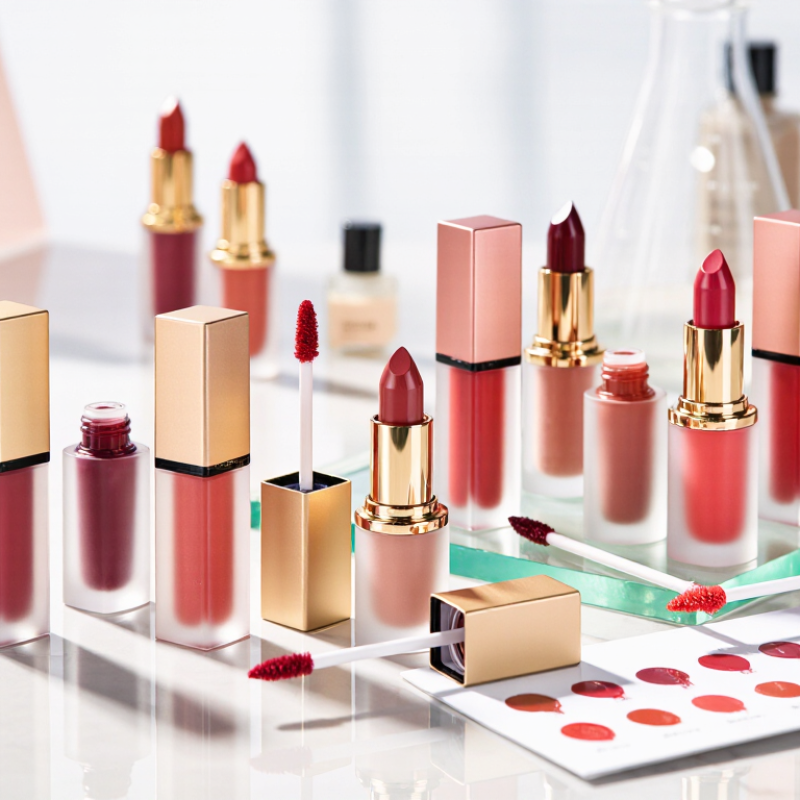
2026 Top Private Label Liquid Lipstick Manufacturers?

What Is Private Label Liquid Lipstick Manufacturing?

Private label liquid lipstick manufacturing turns a cosmetic concept into a controlled, sellable formula. A manufacturer develops the product for your label, rather than selling an existing finished item under its own name. The process may include formula adjustment, shade matching, container selection, filling, labeling, and quality inspection.

The formula must balance rich color, smooth application, drying time, and comfortable wear. Technicians test viscosity with laboratory tools and check whether the applicator delivers an even layer. Stability testing can reveal separation, odor changes, or texture problems over time. Batch records also improve traceability and production consistency. Small details matter.

Tips: Request a sample with your target shade, finish, and packaging. Ask about minimum order quantities, testing documents, ingredient specifications, and production lead times. Confirm how color approval works before mass production.

A reliable manufacturer should explain each stage clearly and provide realistic timelines. Shade matching can vary between a digital image and a physical sample. It may require several adjustments. A perfect first sample is uncommon, and pretending otherwise creates risk. Review the applicator, cap seal, label adhesion, and fill weight under practical conditions. A lipstick that looks beautiful on a sample card may feel heavy, crack, or transfer during daily use. Clear communication and documented inspections help reduce those surprises.

How to Evaluate Liquid Lipstick Manufacturers in 2026

In 2026, evaluating private label liquid lipstick manufacturers requires more than comparing unit prices. Grand View Research estimates the global lipstick market reached about US$11.5 billion in 2023, with a projected 6.4% CAGR through 2030. This growth increases supplier pressure. It also creates quality risks. Request batch records, stability-test results, and pigment documentation before discussing large orders. A reliable factory should explain viscosity, drying time, transfer resistance, and preservative control in practical terms.

Check whether the manufacturer follows ISO 22716 cosmetic GMP principles and maintains traceable raw-material records. Review sample filling accuracy, applicator alignment, cap sealing, and odor changes after heat exposure. One useful test is storing samples at room temperature, 40°C, and under repeated opening cycles. The formula should remain uniform. Small separation matters. It may reveal bigger production weaknesses.

NIQ reported that US private-label sales reached approximately US$236 billion in 2023, rising 4.7% year over year. That scale suggests strong demand, but not automatic reliability. Ask for minimum order quantities, lead-time history, defect rates, and corrective-action procedures. Independent testing should verify microbial safety, heavy-metal limits, and product compatibility with packaging. Supplier claims are not evidence. A polished sample can hide inconsistent batches. Evaluate communication, documentation, and repeatability together, then record every unanswered question.

Top Private Label Liquid Lipstick Manufacturers to Consider

Choosing among the top private label liquid lipstick manufacturers to consider in 2026 requires more than comparing prices. A reliable manufacturer should show consistent color matching, stable texture, and clear production records. Ask for samples in several shades, including nude, red, and deep berry. Check drying time, transfer resistance, scent, and comfort after four hours. A strong partner should also explain ingredient sourcing, batch testing, packaging compatibility, and product shelf life.

Tips: Request a small pilot order before signing a large contract. Review the factory’s quality procedures and production capacity. Confirm minimum order quantities, lead times, revision policies, and support for compliant labeling. Test the applicator on different lip shapes. Small details matter. A crooked wand can damage the user experience.

Some manufacturers offer impressive customization, but flexibility may reduce consistency between batches. That risk deserves attention. I would compare at least three samples using the same evaluation sheet, rather than trusting polished sales claims. Look for documented testing, responsive communication, and a clear process for handling defects. Certifications can support credibility, but they should be verified and matched to the manufacturing site. The best choice is not always the cheapest supplier. It is the one that can repeat the same finish, shade, and fill level at commercial scale. Weak follow-up is a warning sign.

2026 Top Private Label Liquid Lipstick Manufacturers to Consider

Regulatory timing checkpoints for evaluating private label liquid lipstick manufacturing partners

The chart compares official market-entry and compliance timing requirements that manufacturers should be prepared to support. A value of zero means the notification or submission must be completed before the product is placed on the relevant market, rather than representing a waiting period.

Sources: U.S. FDA Cosmetics Registration and Listing; European Commission CPNP; UK SCPN Guidance.

Key Services, Formulas, Packaging, and Compliance Standards

2026 Top Private Label Liquid Lipstick Manufacturers?

Reliable private label manufacturers offer more than a ready-made color chart. Their services may include custom formulation, shade matching, sample development, filling, labeling, and batch inspection. Experienced teams should explain minimum order quantities, lead times, and revision limits before production begins. Small pilot batches are valuable. They reveal color separation, applicator leakage, or uncomfortable wear.

Formula selection needs practical testing. Matte liquids require balanced film-formers, pigments, emollients, and drying agents. Creamier formulas need stronger stability control. A manufacturer should provide ingredient declarations using current INCI names. Test reports should cover stability, viscosity, microbial quality, and packaging compatibility. Transfer resistance sounds attractive, but excessive dryness can damage the user experience. That trade-off deserves honest discussion.

Packaging details affect safety and shelf performance. Check the wiper, doe-foot applicator, cap closure, and inner seal. Fill tests can identify leakage after heat and vibration exposure. Packaging materials should suit the formula and intended market. Compliance support may include cosmetic GMP practices, ISO 22716 alignment, safety assessments, claims review, and region-specific labeling guidance. Requirements differ across countries, so one document cannot cover every market. Manufacturers should retain batch records and provide traceability. Some suppliers still offer vague certificates. That is a warning sign. A careful buyer should verify testing dates, facility controls, and the exact product covered.

2026 Top Private Label Liquid Lipstick Manufacturers? - Key Services, Formulas, Packaging, and Compliance Standards

Manufacturer Capability Profile Typical Product Focus Typical Private-Label MOQ* Key Services Common Formula Options Packaging Support Relevant Quality and Compliance Standards
Full-service color cosmetics manufacturer Liquid matte lipstick, satin lipstick, lip gloss, lip liner, and coordinated lip collections Approximately 1,000–10,000 units per shade, depending on formula, packaging, and customization level Concept development, shade matching, laboratory samples, stability testing, bulk production, filling, assembly, and finished-goods inspection Anhydrous cream, liquid matte, satin, high-shine, transfer-resistant, vegan, and fragrance-free options Standard tubes, doe-foot applicators, wands, caps, labels, cartons, decoration, barcode placement, and component compatibility testing ISO 22716 cosmetic GMP; applicable U.S. FDA cosmetic requirements, including MoCRA obligations; EU Regulation (EC) No. 1223/2009 when sold in the EU
Low-MOQ private-label specialist Ready-made liquid lipstick bases with customized labels, shades, or selected packaging Approximately 100–1,000 units per SKU when using existing formulas and stock components Catalog selection, label customization, sample ordering, basic color selection, production coordination, and fulfillment support Pre-developed matte, creamy, gloss, metallic, and moisturizing bases; customization may be limited Stock tubes and applicators, pressure-sensitive labels, standard cartons, and limited decoration options Supplier GMP documentation, ingredient list review, batch records, and market-specific labeling checks should be requested before purchase
Custom formulation laboratory Distinctive liquid lipstick textures, high-pigment formulas, sensitive-lip products, and claim-led concepts Approximately 3,000–20,000 units per SKU after formula approval Brief evaluation, ingredient selection, prototype rounds, pigment dispersion, sensory optimization, compatibility testing, and technical documentation Silicone-based long-wear, oil-based emollient, water-in-oil, low-transfer, plumping, moisturizing, and preservative-optimized systems Custom primary packs, applicator selection, airless or specialty components where technically suitable, decoration, and packaging testing Formula safety assessment, microbiological risk assessment where applicable, stability data, raw-material specifications, and market-specific product information files
High-volume contract manufacturer Large shade ranges, promotional collections, retail programs, and repeat-production liquid lip products Approximately 10,000–100,000+ units per SKU, subject to line capacity and packaging availability Demand planning, purchasing, bulk compounding, automated filling, assembly, quality control, palletization, and export documentation Standardized matte, satin, gloss, metallic, and long-wear bases designed for repeatable industrial processing High-speed filling lines, standard tube formats, printed cartons, tamper-evident options, batch coding, and case packing ISO 22716, documented in-process controls, lot traceability, finished-product specifications, and customer or third-party audits
Natural and vegan-focused manufacturer Vegan, plant-based, clean-positioned, fragrance-free, and naturally derived liquid lip products Approximately 1,000–15,000 units per SKU, depending on certification and ingredient sourcing requirements Natural ingredient sourcing, formulation, vegan screening, claim substantiation support, sample approval, and batch production Plant-derived emollients, waxes, botanical oils, mineral or approved colorants, silicone-free, and fragrance-free systems Recyclable plastic or aluminum components, paper cartons, low-ink decoration, and packaging material documentation ISO 22716 where implemented; vegan or natural claims require documented ingredient review and a defined certification or substantiation process
Sustainable packaging and turnkey development partner Premium liquid lipstick with refillable, lightweight, recycled-content, or simplified packaging concepts Approximately 2,000–25,000 units per SKU, depending on custom tooling and component complexity Packaging engineering, component sourcing, formula coordination, decoration trials, lifecycle documentation, and production management Existing matte, satin, gloss, and moisturizing systems selected for compatibility with the proposed package Post-consumer recycled plastic where available, mono-material concepts, paperboard cartons, refill systems, and component recyclability review Packaging compatibility, migration considerations, material declarations, recycling claims review, and applicable extended producer responsibility obligations
Regulatory and export-compliance specialist Products intended for multiple markets, including the United States, European Union, United Kingdom, Canada, and Asia-Pacific Approximately 1,000–20,000 units per SKU, with additional documentation and testing timelines Ingredient compliance screening, label review, claims review, safety documentation, product registration support, and technical file coordination Formula selection based on destination-market restrictions, color-additive rules, fragrance requirements, and prohibited or restricted substances Market-specific labels, INCI ingredient declarations, net contents, responsible-person information, warnings, batch codes, and country-of-origin details U.S. FDA cosmetic labeling and MoCRA requirements; EU Regulation (EC) No. 1223/2009; UK Cosmetics Regulation; Health Canada Cosmetic Notification requirements where applicable
Sampling and product-development partner Early-stage brands testing shade ranges, textures, packaging formats, and consumer-market fit Pilot quantities commonly range from 50–500 units per SKU; commercial MOQ is usually higher Small-batch samples, shade cards, texture comparison, packaging mock-ups, user feedback coordination, and scale-up planning Matte, satin, gloss, metallic, sheer, moisturizing, and buildable-coverage prototypes Sample tubes, decorated mock-ups, label proofs, carton prototypes, and applicator testing before commercial production Pilot-batch specifications, formula version control, ingredient documentation, basic stability planning, and formal compliance review before launch
*MOQ and capability note: MOQ ranges are industry-typical estimates rather than guarantees. Actual quantities, lead times, testing requirements, certifications, and packaging options vary by formula, shade count, component availability, destination market, and customization level. Compliance obligations should be confirmed with the manufacturer and a qualified regulatory professional before commercialization.

How to Choose the Right Manufacturer for Your Brand

2026 Top Private Label Liquid Lipstick Manufacturers: How to Choose the Right Manufacturer for Your Brand

Choosing a liquid lipstick manufacturer requires more than comparing prices. Request product samples in your target shades, then test them after several weeks. Check drying time, transfer resistance, scent, applicator control, and comfort on the lips. A smooth first application can still become flaky later. Ask for ingredient specifications, microbial testing, stability data, and batch traceability. Reliable manufacturers should explain these records clearly, not hide behind vague promises.

Review the facility’s quality system and production controls. Evidence of cosmetic GMP practices, trained staff, sanitation procedures, and documented inspections matters. Confirm who owns the formula, artwork, molds, and testing results. Your agreement should define acceptable shade variation, defect handling, delivery dates, and rework costs. Packaging also deserves attention. A leaking tube can damage cartons before customers ever see the product.

Compare minimum order quantities with realistic sales forecasts. Low entry costs can be attractive, but rushed production may create inconsistent color or poor filling. Ask how the manufacturer manages pigment dispersion across batches. Request a pilot run before approving large production. It may feel slower. It can prevent expensive corrections. Build a scorecard for quality, communication, compliance, lead time, and flexibility. No scorecard is perfect, and early assumptions may need revision. A dependable partner welcomes difficult questions and provides evidence instead of polished claims.

FAQS

What does private label liquid lipstick manufacturing include?

It turns a cosmetic concept into a finished product for your label. Services may include formula adjustment, shade matching, filling, labeling, and inspection.

How should a liquid lipstick formula be tested?

Test color strength, viscosity, drying time, comfort, and transfer resistance. Check whether the applicator creates an even layer. Small details matter.

Why are product samples important before mass production?

Samples reveal problems that digital images cannot show. Test the shade, scent, texture, applicator control, and wear after several weeks.

What packaging details should buyers inspect?

Check the wiper, cap seal, inner seal, applicator, label adhesion, and fill weight. Heat and vibration tests can expose leaks before shipment.

Which testing documents should a manufacturer provide?

Request ingredient specifications, stability data, viscosity results, microbial testing, packaging compatibility data, and batch records. Verify dates and product details carefully.

How can buyers assess manufacturing quality?

Review sanitation procedures, trained staff, inspection records, and cosmetic GMP practices. Ask how pigment dispersion stays consistent across batches.

What should an agreement clarify before production?

It should define formula ownership, artwork ownership, acceptable shade variation, defect handling, delivery dates, and rework costs.

How should minimum order quantities and lead times be evaluated?

Compare them with realistic sales forecasts. Low entry costs may look attractive, but rushed production can create uneven color or poor filling.

Why is a pilot batch useful?

A pilot batch can expose separation, leakage, uncomfortable wear, or inconsistent filling. It may feel slower, yet it can prevent expensive corrections.

Conclusion

This guide explains what Private Label Liquid Lipstick manufacturing involves and how brands can develop customized lip products without building their own production facilities. It covers the complete process, from selecting lipstick textures, shades, pigments, and nourishing ingredients to designing packaging, applying labels, and preparing products for market launch. Readers will also learn how to evaluate manufacturers based on formulation expertise, production capacity, quality control, communication, minimum order quantities, lead times, and customization flexibility.

The article presents the main types of manufacturers worth considering in 2026, including specialists in vegan formulas, long-wear finishes, clean beauty concepts, and adaptable packaging solutions. It also highlights essential services such as sampling, stability testing, ingredient documentation, packaging development, and compliance support. By comparing these factors with a brand’s target audience, budget, product positioning, and growth plans, businesses can choose a reliable manufacturing partner that delivers consistent quality, attractive presentation, and a smooth path from concept to finished product.

Amelia

Amelia

Amelia is a professional marketing specialist with a strong understanding of customer needs, market trends, and strategic communication. As a dedicated member of our team, she combines creative storytelling with practical product knowledge to help audiences make informed decisions. Her expertise......